
Best App-Controlled Vibrators 2026: Lovense, We-Vibe, and Satisfyer Apps Compared
When you buy an app controlled vibrator in 2026, you are not really buying a toy—you are buying into an app ecosystem. The motor matters, but the app decides whether the toy connects on the first try, whether your partner three time zones away can actually drive it, and whether the pattern you built last month still exists after an update. We spent the past two months testing five app controlled vibrators across the three ecosystems that dominate the category—Lovense Remote, the We-Vibe App, and Satisfyer Connect—logging connection drops, measuring real Bluetooth range through walls, and running long-distance sessions on hotel Wi-Fi. Here is how the three platforms actually compare, and which one to buy for your specific use case.
How We Tested These App Controlled Vibrators
Each app controlled vibrator in this guide went through the same routine:
- Pairing test: 10 cold-start pairing attempts per toy (app closed, toy off, start from scratch), counting failures and time-to-connect.
- Range test: Walking away from the phone in a two-bedroom apartment, noting where control lagged and where it dropped entirely—same phone, same rooms, for every toy.
- Dropout log: Every session, we noted whether the connection dropped mid-use and whether it recovered on its own or needed a manual re-pair.
- Long-distance sessions: Six remote-control sessions per ecosystem, with the controlling partner on a different network (mobile data, hotel Wi-Fi, home broadband).
- Pattern builder: We built the same three-phase rising-intensity pattern in each app and compared how painful the process was and whether the pattern synced across devices.
The five toys: the Lovense Lush 3 and Ferri (wearables), the Lovense Domi 2 (wand), the We-Vibe Chorus (couples vibrator), and the Satisfyer Pro 2 Generation 3 (air-pulse with Bluetooth). All five use body-safe silicone on skin-contact surfaces, and all five are current models sold in 2026.
One thing to say up front, because every brand’s marketing avoids it: Bluetooth dropouts are the number-one user complaint across all three ecosystems, and none of these platforms has fully solved it. The differences are in how often it happens and how gracefully each app recovers. More on that below.
The Three Ecosystems at a Glance
| Lovense Remote | We-Vibe App | Satisfyer Connect | |
|---|---|---|---|
| Toys in ecosystem | 20+ | ~15 | 40+ |
| Pairing reliability (our 10-try test) | 9–10/10 | 8–9/10 | 7–8/10 |
| Real-world Bluetooth range | 30–40 ft open, ~15 ft through one wall | 25–30 ft open, ~10 ft through one wall | 20–30 ft open, ~10 ft through one wall |
| Long-distance partner control | ✅ Mature, account-based | ✅ Invite link, per-session | ✅ Works, least stable in our tests |
| Custom pattern builder | ✅ Best in class | ✅ Basic but functional | ✅ Deep, cluttered UI |
| Music / ambient sound sync | ✅ | ✅ (music) | ✅ |
| Hardware fallback if app fails | Buttons on most toys | Squeeze remote (Chorus) | Buttons on all toys |
| Account required for local use | No (yes for remote) | No (yes for remote) | Yes, pushes account hard |
The short version: Lovense is the most polished and the most reliable, We-Vibe has the best hardware fallback story, and Satisfyer has the biggest toy catalog at the lowest prices with the roughest software.
Lovense Remote: The Deepest Ecosystem
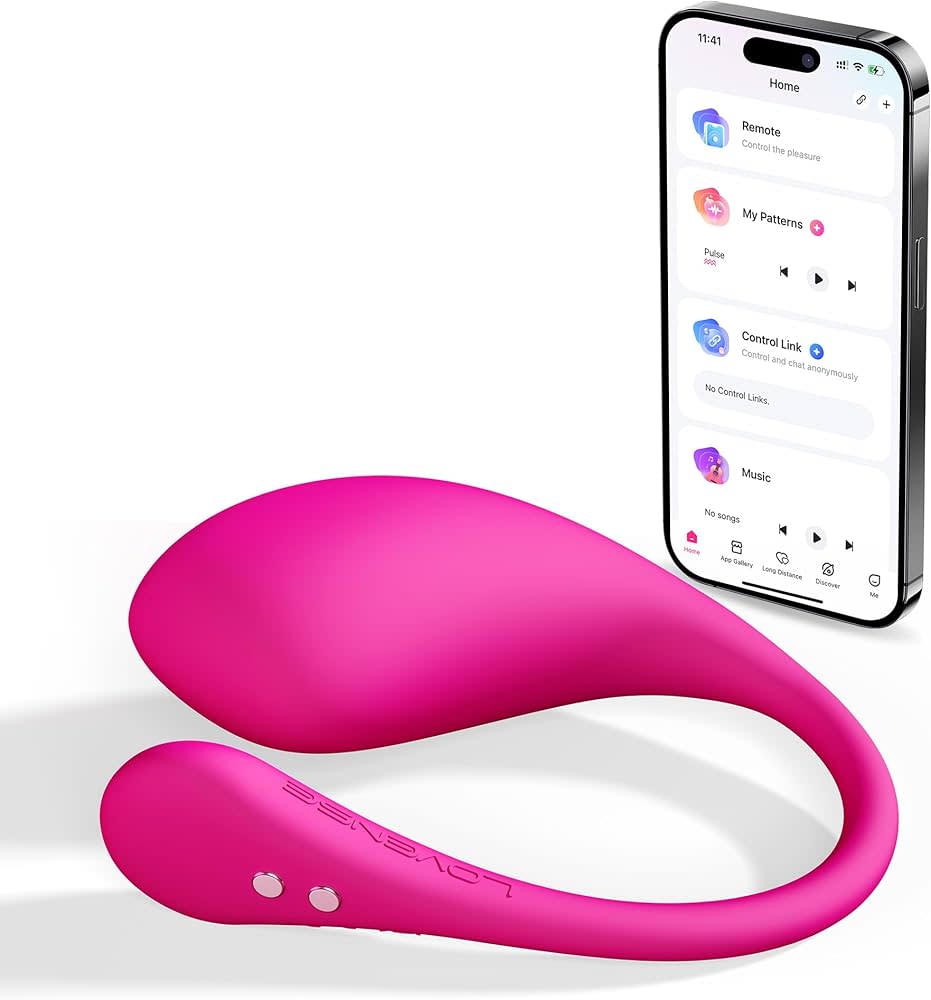
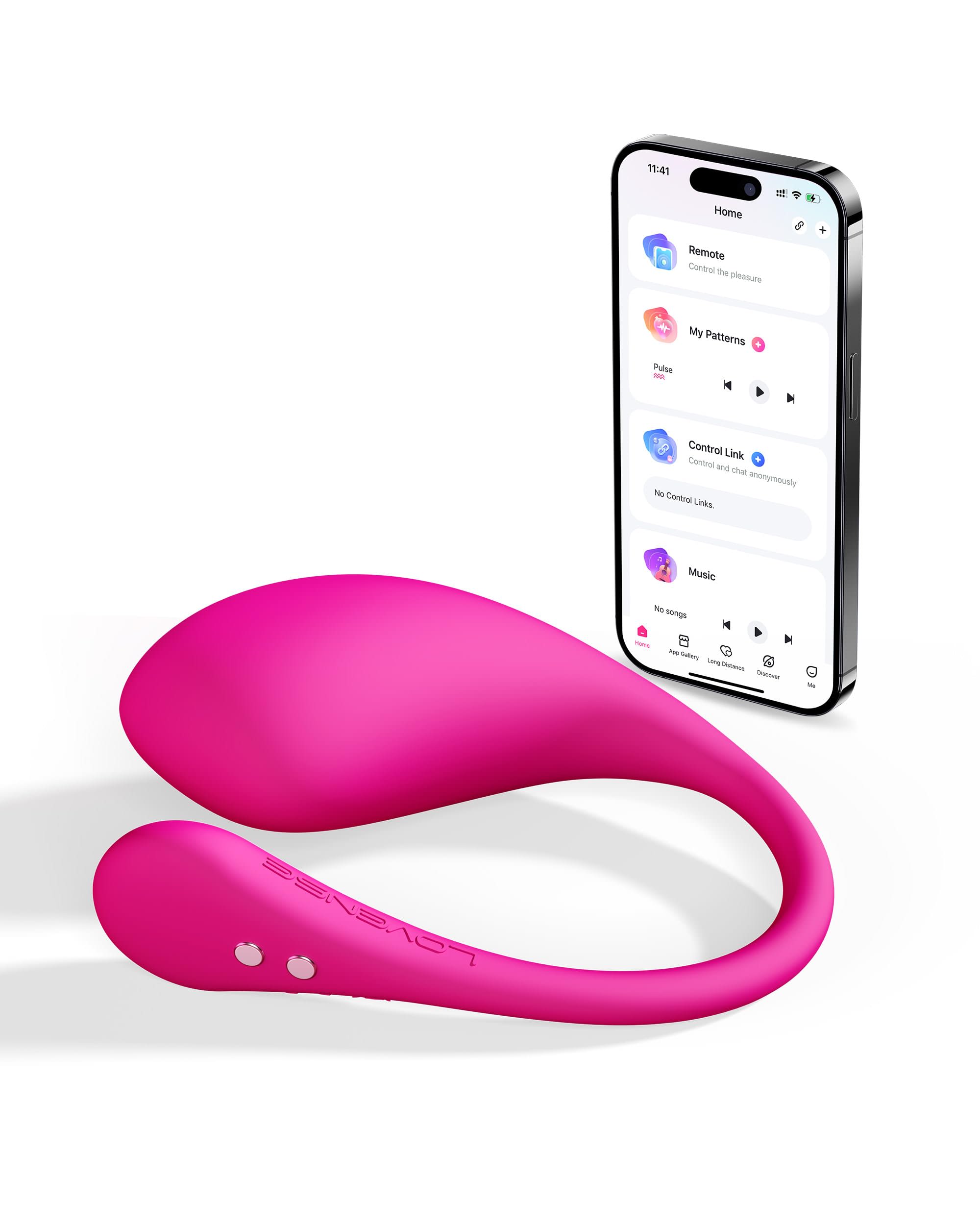
If you have read our Lush 3 review or Domi 2 review, you already know the pattern: Lovense hardware is good, but the app is the moat. Lovense Remote paired on the first attempt in 9 of our 10 cold starts across three different toys, reconnected automatically after every dropout we logged, and is the only app of the three where building a custom pattern felt like a feature rather than a chore—draw the intensity curve with your finger, save it, and it syncs to your account so a partner can trigger it remotely.
Lush 3 — the egg-shaped wearable that made Lovense’s name—is still the default recommendation for long-distance couples. Its antenna sits in the external tail, which is the main reason it held connection through clothing better than any other insertable we tested: roughly 35 feet of open-room range, and it survived the “phone in the other room” test that killed the Satisfyer connection. Battery ran about 4.5 hours of mixed use in our sessions. Check current Lush 3 price
Ferri — the magnetic panty vibrator we picked as the most versatile option in our discreet vibrators guide—is the better buy if your use case is wearable-in-public rather than insertable. It is quieter (~42 dB at max) and the magnet clip means no internal fit variables, but the battery is a real limitation at about 2 hours. Check current Ferri price
Domi 2 — the cordless wand—is the odd one out here: nobody buys a wand primarily for app control, but if you want one toy that covers both solo power sessions and occasional partner-controlled play, it is the strongest motor in the entire app-controlled category. Our full testing notes are in the Domi 2 review. Check current Domi 2 price
Where Lovense falls short: the app is busy. There is a social feed, a cam-model discovery tab, and assorted upsells you cannot fully hide. If you want a minimal remote-control utility, this is not that. And while reconnection is the best of the three, it is not immune—we logged two mid-session drops in roughly forty sessions, both recovered within about ten seconds without manual re-pairing.
We-Vibe App: Best Hardware Fallback, Fewer Frills
We-Vibe’s app (the successor to We-Connect) takes the opposite philosophy from Lovense: fewer features, cleaner interface, and a hardware answer to the Bluetooth problem.
The flagship here is the Chorus, a C-shaped couples vibrator designed to be worn during partnered sex, with two motors (internal and external) controlled independently. What makes the Chorus the most interesting toy in this guide is the squeeze remote: a pressure-sensitive physical remote that talks to the toy on its own dedicated radio link, separate from your phone’s Bluetooth. Squeeze harder, intensity rises. When the app connection hiccuped in our testing—and it did, about once every eight sessions—the remote kept working without a beat. No other ecosystem gives you that kind of graceful degradation. Check current We-Vibe Chorus price
The app itself paired reliably (8–9 of 10 cold starts), and the long-distance mode uses a per-session invite link rather than a persistent account pairing: you send your partner a link, they get control for that session, and the permission expires afterward. Some couples will find that less convenient than Lovense’s standing-authorization model; from a privacy standpoint, we think expiring permissions are the better default.
Pattern creation is where We-Vibe lags. You can build custom vibes, but the editor is a step-sequencer rather than a drawn curve, and there is no way to share patterns between accounts. Video chat inside the app works but was the first thing to stutter on hotel Wi-Fi; we ended up running the video call on a separate app and using We-Vibe purely for control, which worked fine.
Where We-Vibe falls short: range. Because the Chorus is worn internally during sex, with bodies between the toy and the phone, we saw control lag at distances Lovense handled cleanly. The squeeze remote exists precisely because We-Vibe knows this. Treat phone control as the long-distance feature and the remote as the in-person one, and the Chorus makes sense.
Satisfyer Connect: Biggest Catalog, Roughest Software
Satisfyer’s pitch is volume: more than forty app-enabled toys, most under $60, all driven by the free Satisfyer Connect app. The toy we tested is the Pro 2 Generation 3, the Bluetooth-equipped version of the best-selling air-pulse toy of the past decade—same pressure-wave stimulation, now with a liquid-silicone head, adjustable intensity via app, and a vibration motor the older generations lacked. As raw hardware for the money, nothing in this guide comes close. Check current Satisfyer Pro 2 price
The app is the tradeoff, and we want to be specific rather than dismissive. In our 10-try pairing test the Pro 2 Gen 3 connected 7 times without drama; the other 3 required toggling Bluetooth or restarting the app. Once connected, in-room control worked well, and Satisfyer Connect actually has some genuinely advanced features the others lack: you can chain multiple Satisfyer toys in one session, and the pattern editor supports layering the air-pulse channel and the vibration channel separately, which no Lovense or We-Vibe toy can do.
Long-distance is where the gap shows. Of our six remote sessions, two had control latency bad enough (2–3 seconds between input and response) that the controlling partner gave up and switched to describing what to do instead. The other four worked acceptably. If long-distance play is occasional and playful, fine; if it is the core reason you are buying, spend more on Lovense.
Where Satisfyer falls short: beyond connection stability, the app pushes account creation aggressively and the interface buries basic controls under promotional tiles. The hardware buttons on the toy itself work fully without the app, which rescues the value proposition—buy Satisfyer for the toy, treat the app as a bonus.
Bluetooth Dropouts: The Complaint Nobody’s Marketing Mentions
Read user reviews of any app controlled vibrator—any brand, any price—and connection drops are complaint number one. It is worth understanding why, so your expectations are set correctly:
- Bodies block Bluetooth. These toys transmit at low power on the same 2.4 GHz band as Wi-Fi, and the human body absorbs a lot of that signal. An insertable toy is, by design, in the worst possible radio environment. This is physics, not a defect, and it affects all three brands.
- Phones aggressively kill background apps. Most “the app stopped responding” reports trace back to the operating system suspending the app to save battery. Disabling battery optimization for the toy’s app fixed the majority of our mid-session drops on Android; iPhones were less prone but not immune.
- Recovery matters more than prevention. Since drops will happen, the real differentiator is what happens next. Lovense reconnected automatically within seconds in our testing. We-Vibe’s app usually recovered, and the Chorus’s squeeze remote papered over the gap. Satisfyer most often needed a manual reconnect.
Practical setup advice that improved reliability across all three ecosystems: keep the phone in the same room and off the floor, charge the toy fully (low battery correlates with flakier connections), and pair in the app before the toy is in position rather than after.
Best App Controlled Vibrator by Use Case
Ranking the ecosystems overall misses the point—the right answer depends on what you are buying it for:
| Use case | Winner | Why |
|---|---|---|
| Long-distance relationship | Lovense Lush 3 | Most reliable remote control, best reconnection, mature partner features |
| Couples in the same bed | We-Vibe Chorus | Squeeze remote sidesteps Bluetooth entirely; dual independent motors |
| Public/wearable play | Lovense Ferri | Quietest motor here, magnetic clip, solid app range through clothing |
| Best hardware per dollar | Satisfyer Pro 2 Gen 3 | Flagship air-pulse tech at a budget price; app is a bonus, not the draw |
| Power first, app second | Lovense Domi 2 | Strongest motor in the app-controlled category, wand versatility |
If you are choosing a platform for the long haul—buying multiple toys over time—Lovense is the safest ecosystem bet: the app is the most reliable, the toy lineup covers the most categories, and patterns and partner authorizations carry across every toy you add.
Privacy: What You’re Sharing and With Whom
A smart vibrator is an internet-connected device that knows intimate things about your schedule, and the category has had real incidents in the past—vendors have faced scrutiny and legal action over data collection practices in earlier years. The landscape in 2026 is better, but “better” is doing some work in that sentence. Our practical guidance:
- Local control needs no account on Lovense and We-Vibe—pairing is direct Bluetooth. Use it that way if you never do long-distance. Satisfyer effectively requires an account for anything beyond basic control.
- Long-distance requires a relay. Remote control passes through the vendor’s servers by necessity. All three brands state that control traffic is encrypted; treat chat logs, synced patterns, and session metadata as data that exists on someone else’s computer.
- Use a throwaway identity. Nothing in any of these apps requires your real name. A dedicated email address costs nothing.
- Check app permissions. None of these apps needs your contacts or location for core toy control. Deny by default, grant if a specific feature asks and you actually want that feature.
None of this should scare you off the category—it is the same hygiene you would apply to any smart-home device. It just deserves a paragraph the product pages will not give you.
FAQ
Do app-controlled vibrators work without the app? Mostly yes. Every Lovense and Satisfyer toy in this guide has onboard buttons that work with no phone involved, and the We-Vibe Chorus ships with its dedicated squeeze remote. You lose custom patterns and remote partner control, but basic operation does not depend on the app.
How far away can a partner control the toy? In the same building, you are limited by Bluetooth: 20–40 feet in open air, less through walls and bodies. Over the internet, distance is irrelevant—your partner can be anywhere with a data connection, because control routes through your phone. The weak link is your phone’s connection to the toy, not the miles between you.
Which app is best for long-distance couples? Lovense Remote, and it was not close in our testing. Pairing with a remote partner is a one-time authorization, reconnection after drops is automatic, and sessions on mobile data stayed responsive. We-Vibe is a workable second. Satisfyer Connect works but had the most latency and drops in our long-distance sessions.
Biozzing may earn a commission if you buy through links on this page, at no extra cost to you.