
Remote Control Vibrators 2026: App vs Physical Remote, and What Actually Works in Public
Most guides to the remote control vibrator category are really guides to long-distance apps—internet range, video calls, pattern libraries for a partner three time zones away. This is not that guide. This one is about handing the controls to someone who is in the room with you: across the dinner table, next to you on the couch, walking half a step behind you at the grocery store. Same-room remote play is a different problem with different hardware answers.
The short version: the control method matters more than the toy. A physical radio-frequency remote, a Bluetooth app connection, and an internet-relayed app connection behave very differently once you leave the bedroom, and the “smartest” option is frequently the least reliable one. We tested the major control types across restaurants, walks, car rides, and one very educational movie theater; this guide covers what held up, which wearables stayed in place, and the etiquette that keeps this play fun instead of stressful.
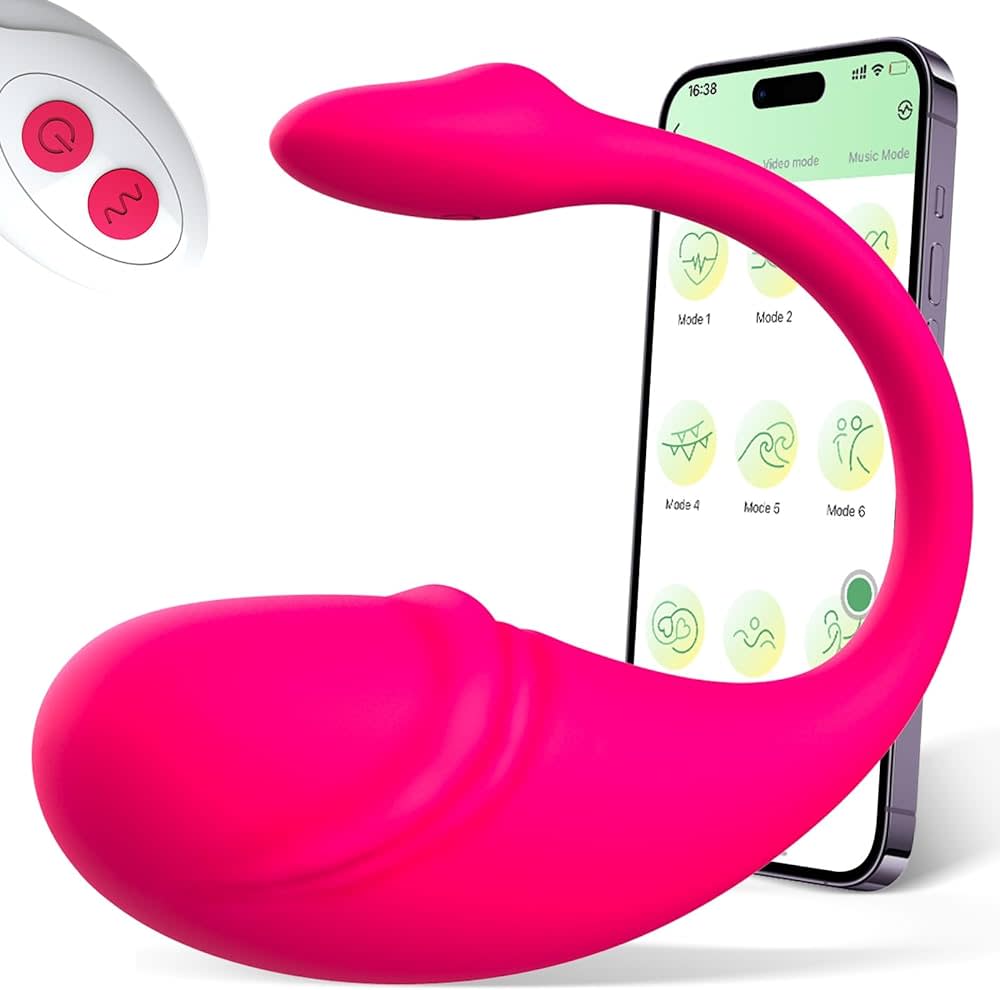
The Three Types of Remote Control Vibrators (and How They Connect)
Every remote vibrator on the market uses one of three control paths. Brands rarely spell this out on the box, but it is the single most useful thing to know before buying.
| Control type | How it works | Typical range | Reliability in practice |
|---|---|---|---|
| Physical RF remote | Dedicated radio-frequency fob, no phone involved | ~10 feet clothed | Excellent—no pairing, no app, no dropouts |
| Bluetooth app (same room) | Phone connects directly to the toy | 15–30 feet, less through bodies and fabric | Good at home, inconsistent in motion |
| App over internet | Phone relays commands through the brand’s servers | Unlimited | Excellent range, but adds latency and needs data on both ends |
Physical RF remotes are the oldest technology here, and that is their advantage. The fob talks straight to the motor on a radio frequency—no phone, no account, no firmware. Click, buzz. The tradeoff is range (a wall or a full room between you can weaken the signal) and simplicity: most remotes give you a handful of intensity steps and patterns, not a full control surface.
Bluetooth app control is what most modern toys ship with. In a bedroom it works well and unlocks the good stuff—custom patterns, precise intensity sliders, one phone controlling two toys. The catch is that Bluetooth is a short-range, line-of-sight-ish protocol being asked to travel through a human body, layers of clothing, and sometimes a chair. Signal drops in the 15–30 foot claimed range are normal, not defective.
Internet-relayed app control is the long-distance mode, and it has a sneaky same-room use: because commands route through the brand’s servers rather than a direct Bluetooth link, two people in the same crowded venue can sometimes get a more stable connection over LTE than over a struggling direct pairing. The costs are latency (a beat of delay between tap and buzz) and the requirement that both phones have data. In this guide it is the fallback mode, not the main event.
Why Physical Remotes Still Beat Apps for In-Person Play
If your play is happening in the same room, a physical remote wins on almost every axis that matters, and it is worth saying plainly because app control gets all the marketing attention.
No pairing ritual. An RF remote works the moment both devices have batteries. App toys need the phone unlocked, the app open, Bluetooth on, and the connection held—several failure points before the fun starts, and re-pairing mid-date in a restaurant booth is the least sexy troubleshooting on earth.
No dropouts from motion. Bluetooth hates moving bodies. Stand up, put the phone in a back pocket, walk to the bar, and the connection you tested at home starts stuttering. RF signals are less fussy about orientation and pockets at short range.
Partner-friendly by design. A remote is a single-purpose object you can physically hand over, and that handoff is the whole point of this category—a small, tactile transfer of control. Handing over an unlocked phone with an app open is clumsier and puts your partner’s attention on a screen; a fob disappears into a palm, and the controlling partner stays present and clicks by feel.
Nothing to glance at. In public, a person repeatedly staring at a phone reads as distracted. A person with a thumb on a fob in their jacket pocket reads as nothing at all.
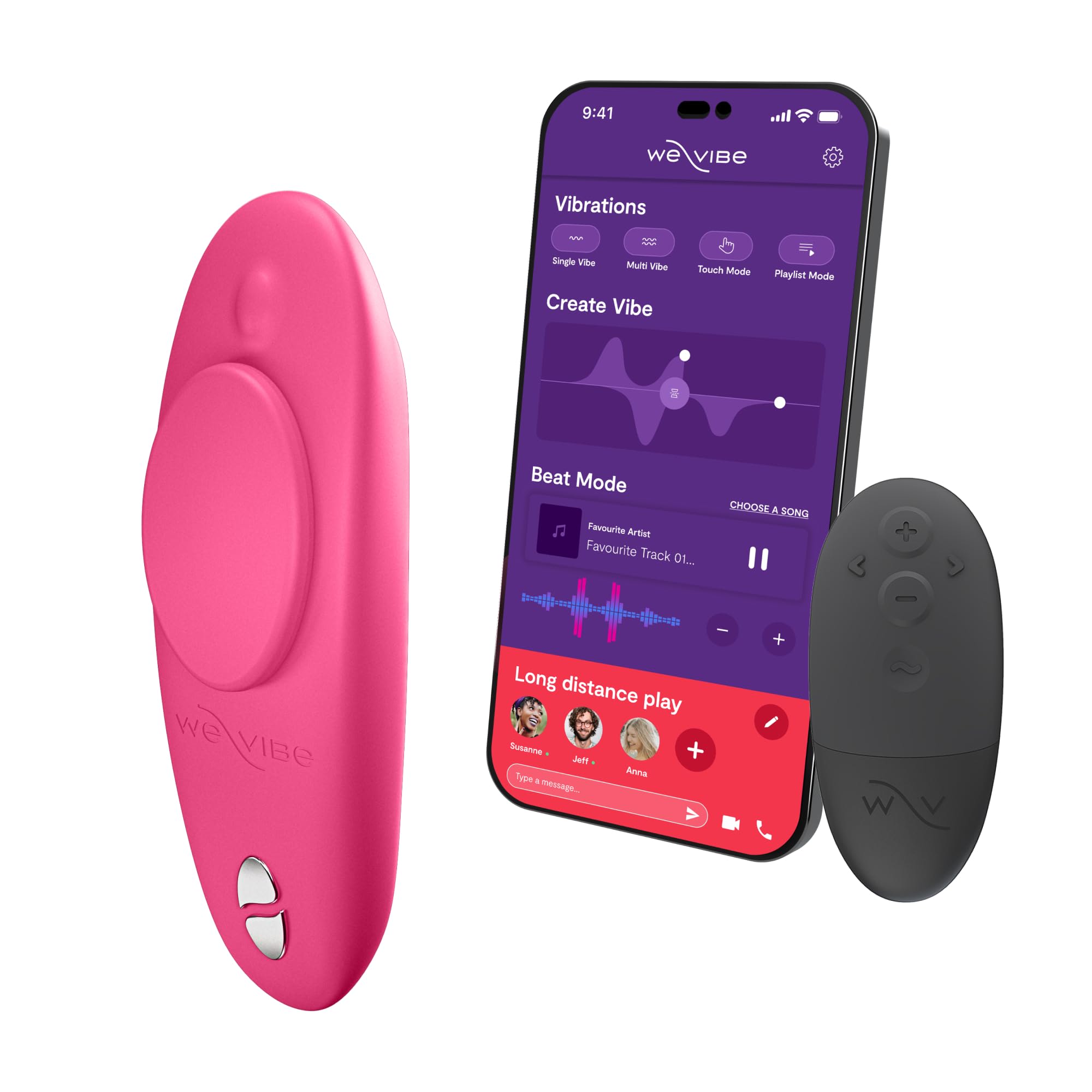
Apps win when you want depth: pattern design, gradual ramps, two-toy sync, and obviously anything beyond one room. The mature answer for same-room play is the hybrid—a toy that ships with a physical remote and supports an app, so you can match the control method to the evening. That hybrid is why the We-Vibe Moxie sits at the center of this guide.
Wearables That Actually Stay in Place
A remote vibrator you wear is only as good as its anchoring, because a wearable that migrates is both ineffective and conspicuous—nothing breaks discretion faster than adjusting your underwear in public. Three anchoring systems dominate, in ascending order of security:
- Insertable with a retrieval antenna (Lush-style). Held in place internally; the external antenna doubles as the Bluetooth antenna. Very secure once positioned, and the most intense stimulation of the three—but positioning matters, and for some bodies the pressure placement is better seated than walking.
- Magnetic clip-ons (Ferri-style). The vibrator sits inside the underwear against the body; a magnet on the outside of the fabric clamps it in place. Surprisingly secure with standard-weight cotton, weaker through thick seams or shapewear. The big win: nothing inserted, so it is comfortable for hours and repositions in seconds.
- Contoured panty vibes (Moxie-style). Same magnetic-clip concept with a body-contoured shape designed to sit flat against the wearer. The shape spreads contact across a wider area, which most testers found stayed put better during walking than smaller clips.
Fit rules that held across all three: snugger underwear beats loose every time; a gusset seam gives magnets something to grip; and do a five-minute walk test at home before trusting any wearable for a whole evening out.
Public Wear: Realistic Expectations
Product pages sell a fantasy of undetectable public play. The reality is more conditional, and knowing the conditions is what keeps the experience fun.
Noise is about ambient volume, not the motor spec. A 45 dB motor is inaudible in a restaurant and clearly audible in a quiet office or a library. Rule of thumb—if the venue is quiet enough that you would notice someone’s phone vibrating in their bag, it is quiet enough that someone might notice yours. Bars, restaurants with music, city streets, and transit are forgiving. Elevators, waiting rooms, and dinner-table lulls are not, which is why a physical remote (instant off, no phone fumbling) is the safer public tool.
Seated vs walking are different experiences. Seated, a wearable stays exactly where you put it and pressure is consistent—this is why “dinner date” is the canonical use case. Walking changes contact with every step: intensity that felt moderate at the table can feel like too much, or like nothing, mid-stride. Plan intensity around what the wearer is doing, not just where they are.
Connections through pockets and bodies. Bluetooth performs worst exactly where public play happens: the wearer’s body between the toy and the controller’s phone. Sitting side by side works better than across a wide table; phone in a front pocket or in hand beats a back pocket or a bag. An RF remote handles the across-the-table case with no drama, which—again—is the physical remote’s home turf. If you insist on app control in a crowded venue, the internet-relay mode over LTE is often steadier than a strained direct Bluetooth link.
Dress rehearsal beats improvisation. Wear the toy around the house for an hour first. You will learn its noise floor, its battery behavior, and its fit quirks with zero stakes. If discretion is your main concern, our discreet vibrators guide covers the sound-and-appearance side of this problem in depth.
Consent and Etiquette: Remote Control Vibrator Ground Rules
Handing over control is the entire appeal of a remote control vibrator, and it only works because it is agreed surrender. This section is short but it is the most important one in the guide.
Set boundaries before the toy goes in the room. Decide together: where you will play, what intensity range is on the table, who holds the remote, and what is off-limits. The negotiation is not a mood-killer; done right, the anticipation it builds is half the experience.
Agree on a stop signal. In-person play needs the equivalent of a safeword that works when speaking is awkward—a hand squeeze, a specific phrase in conversation, a text emoji if you are apart in a venue. The wearer must always be able to end the session instantly and unilaterally, and the controller’s job is to check in early and often. “Too much, or more?” is a complete sentence.
The wearer keeps a kill switch. Whatever the control method, the wearer should be able to stop the toy without the controller: know where the power button sits through fabric, or keep the app on your own phone as an override. Never engineer a situation where only one person can turn it off.
Public play involves only the two of you. The consenting parties are you and your partner—full stop. That means keeping it genuinely private: no visible reactions that pull strangers into your scene, no play in settings where discovery would involve unwilling people (workplaces, family gatherings, anywhere kids are present), and nothing that crosses local decency laws. The standard is simple: fully clothed, fully discreet, and if the toy were discovered, the only people embarrassed would be the two of you. Anything beyond that is not edgy, it is a consent violation with bystanders.
Debrief afterward. Two minutes of “what worked, what didn’t” makes the next session better. If raising the topic at all feels daunting, we wrote a full script-level walkthrough in how to talk to your partner about vibrators.
The Picks
Lovense Lush 3 — Best for App Power Users
The Lush 3 is the default answer when the controlling partner wants the deepest toolkit: precise intensity control, custom patterns, and the most polished app in the category. As a same-room toy it is a Bluetooth performer with the usual Bluetooth caveats, but its strong antenna design makes it more connection-stable than most insertables, and the internet-relay fallback bails you out in crowded venues. The insertable form factor also makes it the most intense wearable here. We put it through a full hands-on evaluation in our Lovense Lush 3 review.
Get it if: your play leans app-first and you want one toy that covers couch, dinner date, and everything the app ecosystem offers. Check the Lovense Lush 3 here (affiliate link).
Lovense Ferri — Best Set-and-Forget Clip
The Ferri is the low-friction option: magnetic clip, nothing inserted, comfortable for a whole evening, and quiet enough that we trust it in most venues. App-only control means it inherits Bluetooth’s quirks, but because it sits close to the body’s surface, connections held better in our testing than with insertables. It is the pick for someone who wants to put a wearable on at 7 p.m. and forget it exists until their partner reminds them.
Get it if: comfort and simplicity beat raw intensity for you. Check the Lovense Ferri here (affiliate link).
We-Vibe Moxie — The Panty-Vibe Benchmark (Physical Remote + App Hybrid)
The Moxie is the reason the hybrid category exists: a contoured magnetic panty vibe that ships with a genuine physical RF remote and full app support. Hand the fob across the table for zero-latency, zero-pairing in-person play; switch to the app when you want patterns or the controller is out of fob range. The contoured shape stayed in place during walking better than any small clip we tested, and the rumbly motor sits at the quiet end of the wearable field. If this guide has a single default recommendation for same-room and public play, this is it.
Get it if: you want the physical-remote experience without giving up app depth—the best of both control types in one wearable. Check the We-Vibe Moxie here (affiliate link).
We-Vibe Chorus — Best for Couples, with the Squeeze Remote
The Chorus is a wear-during-sex couples vibrator, and its remote is the cleverest control surface in this guide: a squeeze-sensitive fob where grip pressure maps to intensity. Squeeze harder, it goes harder—control by instinct rather than by menu, which keeps both partners’ attention on each other instead of on a screen. It is not a public-wear toy; it is here because the squeeze remote is the best argument for physical controls in partnered play, with the We-Connect app available when you want structured patterns.
Get it if: you want a couples toy where the remote itself is part of the intimacy. Check the We-Vibe Chorus here (affiliate link).
Quick-Pick Table
| Scenario | Pick |
|---|---|
| Dinner date, zero-fuss control | We-Vibe Moxie (physical remote) |
| App-first couple, maximum features | Lovense Lush 3 |
| All-evening comfort, nothing inserted | Lovense Ferri |
| Partnered play at home, intuitive control | We-Vibe Chorus (squeeze remote) |
FAQ
What’s the real difference between an app and a physical remote?
A physical RF remote talks directly to the toy—no pairing, no phone, effectively no latency, but limited range and simple controls. An app offers precise intensity, custom patterns, and (via internet relay) unlimited range, at the cost of pairing steps, occasional Bluetooth dropouts, and a screen between you and your partner. For same-room play we prefer physical remotes or hybrids like the Moxie; apps earn their keep for pattern depth and anything beyond one room.
Can anyone else connect to or notice my remote vibrator in public?
App-controlled toys require an explicit pairing and in-app authorization, so a stranger cannot casually take control; RF remotes are matched to their toy at the factory. As for noticing: in a venue with normal ambient noise, a quiet wearable under clothing is not detectable, but quiet rooms are a different story—see the public-wear section above, and always keep the wearer’s kill switch in reach.
Do wearable remote vibrators stay in place while walking?
The good ones do, with snug underwear. Contoured panty vibes like the Moxie held position best in our walk testing, magnetic clips like the Ferri are close behind with standard-weight fabric, and insertables are secure but change character in motion. Do a walk test at home before any evening out.
Biozzing may earn a commission if you buy through links on this page, at no extra cost to you.