
Rose Toy Review 2026: Are Viral Rose Vibrators Worth It (and What to Buy Instead)?
The rose toy is probably the most recognizable sex toy of the decade, and it got there almost entirely through TikTok: millions of views, breathless testimonials, and a red silicone rose with a hollow opening where the stamen would be, sold on Amazon, Etsy, and drop-shipping storefronts under dozens of different brand names. We bought three at three price points, ran them through the same testing routine we use for every air-pulse device we review, and spent time in buyer reviews cataloging how these things fail. The short version: the rose is a genuinely decent concept wrapped in a supply chain lottery. Whether yours is worth the money depends heavily on which unit you receive, and there are ways to stack the odds—or skip the lottery entirely.
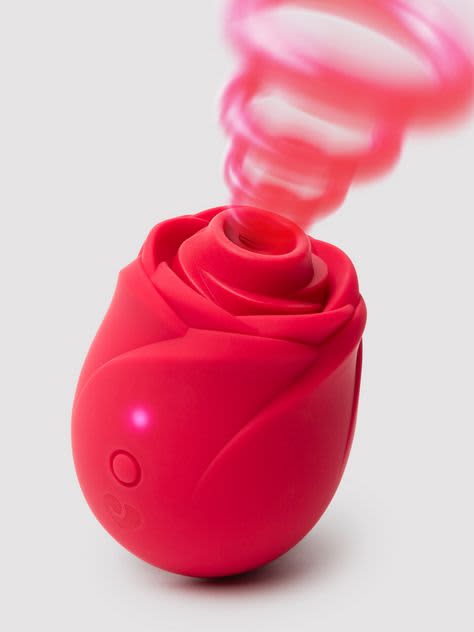
What the Rose Toy Actually Is
Strip away the flower shell and the rose toy is an air-pulse clitoral stimulator—the same category of device as the Womanizer Premium 2 and Satisfyer Pro 2 we covered in our air pulse technology guide. A small internal pump oscillates air pressure inside the hollow “bud” opening, creating rhythmic pressure waves against the clitoris without direct friction contact. It is not suction in the vacuum sense, despite the marketing language. If you have used any air-pulse toy before, the sensation profile is familiar: pulsing, fluttering, more focused and less buzzy than a traditional vibrator.
Here is the part most viral videos leave out: there is no “Rose Toy” company. The rose is a white-label product. A handful of manufacturers produce the core design, and hundreds of resellers put it in their own packaging under names like Rose Toy Official, Adorime Rose, Inya Rose (one of the few with an actual established brand behind it), Rosetoy, LoveRose, and countless single-use Amazon storefront brands that exist for a season and disappear. Two roses that look identical in product photos can come from entirely different production runs with different motors, different silicone, and different quality control.
Typical specs for the standard rose, where sellers publish them at all:
- Size: roughly 2.5 x 2.1 inches — palm-sized
- Modes: usually 7 to 10 intensity/pattern settings on a single button
- Materials: advertised as body-safe silicone (more on that claim below)
- Charging: magnetic two-pin contact charging on most units; USB-C on some newer versions
- Waterproof: usually advertised IPX7, inconsistently true
- Price: anywhere from $10 to $60 for what appears to be the same device
That last line is the whole story of this review.
Why the Same Rose Toy Costs $12 or $60
Search “rose toy” on any marketplace and you will find visually identical products spanning a 5x price range. This is not a premium-versus-budget tier system like Womanizer versus Satisfyer, where the price difference buys measurably different engineering. With the rose, the price difference mostly buys a different position in the same white-label supply chain.
What actually varies between units, based on our three samples and a deep read of verified-buyer reviews:
Motor quality. Our $14 unit and our $42 unit had noticeably different motors. The cheaper one was louder—roughly electric-toothbrush volume, audible through a door—and its pressure waves felt shallower at every setting. The mid-priced unit was quieter and stronger. Nothing in the near-identical listings predicted this.
Silicone consistency. Body-safe silicone is the standard claim on every listing. No buyer can verify it without lab testing, and white-label manufacturers change material suppliers between runs. One of our three units had a visible seam around the bud opening and a faint chemical smell that took two washes to fade; the other two were smooth and odorless. Seams also collect residue and are the first place cheap silicone degrades.
No warranty, no support channel. This is the structural difference between a rose and a branded air-pulse toy. When a Womanizer fails, you invoke a warranty measured in years. When a rose fails, the “brand” on the box frequently no longer exists as a storefront. Your only recourse is the marketplace return window—every rose is effectively a 30-day warranty product.
Quality control is a lottery. Buyer reviews for the same listing routinely split between “best toy I have ever owned” and “died in two weeks.” Both reviewers are telling the truth. They received different units.
To be clear about framing: this is not a knock on where these products are made. The problem is the unbranded, white-label distribution model—no accountable company, no consistent spec, no warranty—not the factories themselves.
What the Rose Does Well
An honest review has to account for why this toy went viral in the first place, because it is not just marketing. When you get a good unit, the rose holds up surprisingly well for the money.
The air-pulse experience is genuinely decent. Our best-performing unit delivered pressure-wave stimulation that we would place in the same neighborhood as an entry-level Satisfyer—not as refined at the low end, not as strong at the top end, but recognizably the same category of sensation. For someone who has never tried air-pulse before, a $20 rose is a legitimate proof-of-concept purchase.
The shape is smart. The rose form factor is not just decoration. The bud shape fits the palm naturally, the petals give your fingers something to grip when things get slippery, and the single-button interface is simple to operate without looking. Ergonomically it is better thought out than plenty of toys costing four times more.
It does not look like a sex toy. Sitting on a nightstand, a rose reads as an ornament. For people in shared living situations, this matters—it is the same appeal that drives our discreet vibrator picks. The rose was discreet-by-design before that became a mainstream category.
Gift appeal. Fair or not, a rose in a nice box has become a semi-mainstream gift between partners in a way that a clinical-looking device has not. The recipient already knows what it is and that other people like it.
The price of entry is low. If air-pulse stimulation turns out not to work for your anatomy—and for some people it does not—discovering that with a $20 rose stings far less than discovering it with a $170 Womanizer.
The Failure Modes Buyers Actually Report
We read through several hundred verified-purchase reviews across multiple rose listings and grouped the recurring complaints. These are patterns, not statistics—we are not going to invent percentages—but the same four issues surface on listing after listing.
1. Loud units. The most common complaint by far. Air-pulse devices are never silent, but a bad rose motor produces a high-pitched whine that defeats the entire discreet-ornament premise. Because motors vary between production runs, noise is unpredictable before purchase.
2. Charging pins corroding. Most roses charge through two exposed magnetic pins on the base. On poorly sealed units, water from cleaning works into the contacts and the pins oxidize; reviewers describe toys that stop taking a charge after a month or two of normal washing. Sealed USB-C ports or well-gasketed contacts fail this way far less often—this is where white-label cost-cutting is visible.
3. Seams and finishing defects in the silicone. Visible mold lines around the bud opening, rough petal edges, and in worse cases small tears at the seam. A seam on a body-contact surface is both a comfort issue and a hygiene issue, since it traps residue that smooth silicone sheds. Our suction toy cleaning guide covers the technique, but no routine fully compensates for a poorly finished surface.
4. No support when something goes wrong. The complaint threading through all the others. Reviewers with defective units describe seller accounts that never respond, brands with no website, and replacement requests that go nowhere once the return window closes. With a rose, the marketplace return policy is the warranty.
None of these are exotic failures. They are what you would predict from a product with no accountable manufacturer competing purely on price. The frustrating part is that the good units genuinely are good—the lottery is the product.
How to Vet a Rose Toy If You Buy One Anyway
If the price and the concept appeal to you, you can meaningfully improve your odds. Here is the checklist we would use:
- Buy from a seller with a real returns process. A listing with thousands of reviews and marketplace-backed returns beats an unknown drop-shipping storefront. You are buying the return window as much as the toy.
- Read the one-star and three-star reviews first, for patterns. Scattered complaints are normal; repeated mentions of the same failure (noise, dead charging, smell) in recent reviews suggest a bad current production run.
- Prefer USB-C or well-reviewed magnetic charging. Charging failure is the most common way roses die. Reviewers praising the charging connection after months of use is signal.
- Do the silicone check on arrival. Genuine silicone is matte or satin, has no strong chemical odor after one wash, and does not feel tacky. A persistent plastic smell, greasy film, or visible seams are reasons to return it before you use it at all.
- Test everything inside the return window. Run every setting, charge it fully at least twice, wash it and confirm it still charges. Lemons mostly announce themselves early.
One thing you will not find here is a purchase link for a rose. We only link to products where we can vouch for what arrives at your door, and the white-label rose market makes that impossible—the listing we tested this month may ship from a different production run next month.
What to Buy Instead If You Want Reliability
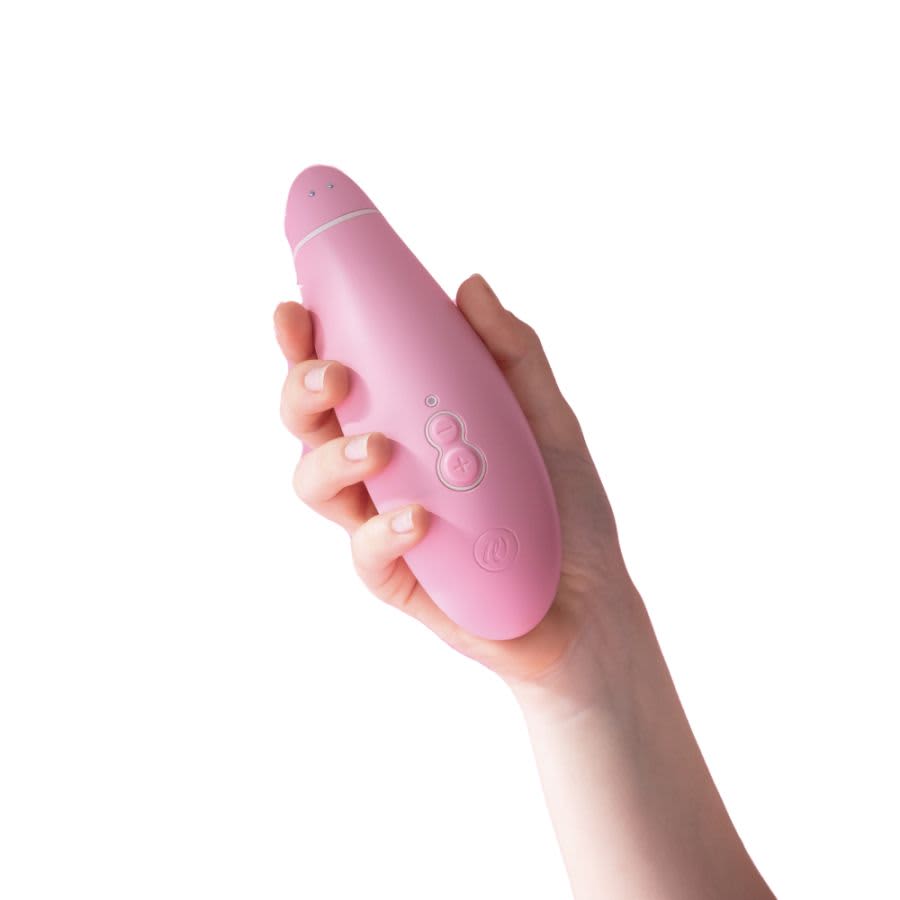
If what attracts you to the rose is the air-pulse sensation rather than the flower itself, the branded market solves every failure mode above—for more money. These three are the ones we would actually point a friend toward, depending on budget and priorities. For a deeper head-to-head of the major brands, see our Lovense vs Womanizer vs Satisfyer comparison.
Womanizer Premium Eco — The Anti-Rose
Price: ~$199 | Check current price →
The Premium Eco is philosophically the opposite of a disposable white-label toy: a repairable, warrantied air-pulse device from the company that invented the category. The head, battery, and body are designed to be replaceable rather than binned, it carries a real multi-year warranty from an accountable manufacturer, and the air-pulse performance sits at the refined top of the category—a wide intensity range with a genuinely gentle low end, which cheap roses uniformly lack. It is ten times the price of a budget rose. It is also the last air-pulse toy many buyers ever need. If the rose’s failure stories are what gave you pause, this is the full correction.
Satisfyer Pro 2 — The Budget Benchmark
Price: ~$40-50 | Check current price →
The Pro 2 is the device the rose is imitating at the rose’s price point, and it is the comparison that makes the rose hardest to recommend. For roughly the cost of a mid-priced rose, you get stronger and more consistent air-pulse output than any rose unit we tested, an established brand with a warranty and support channel, and a proven track record across years of iterations. It will not pass as nightstand decor. But if your budget is $40 and you want air-pulse stimulation that arrives working and stays working, the Pro 2 is the obvious answer—and the pick for most people reading this article.
Lovense Tenera 2 — App Control and Partner Play
Price: ~$99 | Check current price →
The Tenera 2 is Lovense’s air-pulse suction toy, and its case is the app. Like every Lovense device, it runs on Lovense Remote: custom patterns, intensity ramping, and long-distance partner control over the internet—features no rose offers, since white-label products cannot sustain a software ecosystem. Air-pulse performance is solid mid-tier, the charging is the sealed magnetic type that survives washing, and it slots into the same app as any other Lovense toys you own. Pick this over the Pro 2 if app control or partner play is part of how you will actually use it; skip it if you would never open the app, because that is what the extra $50 buys.
Verdict: Is the Rose Toy Worth It?
The rose is fine for: the curious first-time buyer testing whether air-pulse stimulation works for their body before committing real money; the gift-giver whose recipient wants one specifically; and anyone for whom the ornament-grade discretion is the killer feature. Buy it with the vetting checklist above, test it hard inside the return window, and treat anything past six months as a bonus.
Spend more if: you already know air-pulse works for you and want a device still working next year; you want any form of warranty or support; noise matters in your living situation; or you want app features. In that case the Satisfyer Pro 2 at roughly rose money is the rational floor, the Lovense Tenera 2 is the connected middle, and the Womanizer Premium Eco is the buy-once endgame.
The rose toy earned its virality with a good shape, a good price, and a genuinely pleasant sensation when the unit is good. What it never earned is trust—and trust is most of what the extra money buys.
Frequently Asked Questions
Are rose toys good, or is it just TikTok hype?
Both. The underlying air-pulse mechanism is real and, on a good unit, delivers stimulation comparable to entry-level branded devices. The hype problem is consistency: because roses are white-label products from many production runs, two buyers of the “same” toy can receive very different quality. The concept is good; the quality control lottery is the catch.
How do I know if my rose toy is body-safe silicone?
You cannot verify it with certainty at home, which is part of the risk of unbranded products. Practical signals: genuine silicone is matte or satin rather than glossy-greasy, carries no strong chemical odor after a wash, does not feel tacky, and shows no seams or rough mold lines on body-contact surfaces. If a unit fails those checks, return it unused. Established brands are the only reliable way to know what material you are actually getting.
Why doesn’t this review link to a rose toy to buy?
Because we cannot vouch for what would arrive. Rose listings rotate sellers and production runs constantly, so a link that pointed to a decent unit today could ship a lemon next month, and there is no manufacturer standing behind any of it. We only link to products with accountable brands and warranties, which is why our purchase links go to the Womanizer, Satisfyer, and Lovense alternatives instead.
Biozzing may earn a commission if you buy through links on this page, at no extra cost to you.