
Rechargeable Vibrators: Battery Life, Charging Safety, and the 2026 Picks That Last
Rechargeable vibrators have quietly taken over the category—walk any brand’s 2026 catalog and you’ll find maybe one or two battery-powered holdouts in a sea of magnetic charging pins and USB cables. But “rechargeable” on a product page tells you almost nothing about what living with the toy is actually like. How long between charges? What happens when you lose the proprietary cable? Can it go through airport security? Does a dead battery mean a dead toy?
This guide covers the parts of a rechargeable vibrator purchase that spec sheets gloss over: the real economics versus battery-powered toys, an honest ranking of charging connector types, lithium-ion care habits that actually matter (and the myths that don’t), travel logistics, red flags to walk away from, and three picks chosen specifically for battery performance rather than motor hype.
Why Rechargeable Vibrators Win the Math (and the Shower)
The case for going rechargeable comes down to two things: money over time, and water.
The economics
A toy that runs on AAA batteries looks cheaper on day one. It usually isn’t by month six. A typical battery-powered vibrator drains a pair of alkaline AAAs in a handful of sessions—the motor is the single hungriest thing you can attach to a AAA cell, far more demanding than a TV remote. Use the toy a couple of times a week and you’re buying batteries on a subscription you never signed up for. Rechargeable AAs and a charger soften the cost but add their own friction: you now own a charging station for a toy that could have just had one built in.
A rechargeable vibrator flips that. The battery is part of the purchase price, the electricity to charge it rounds to nothing, and over a toy’s usable life the recharge-versus-replace math consistently favors the built-in cell. Somewhere between the first and second year of regular use, the rechargeable toy has typically paid back its price premium purely in batteries you didn’t buy—and that’s before counting the dead-battery-at-the-wrong-moment tax, which everyone pays eventually and nobody budgets for.
The waterproofing
The quieter advantage is structural. A battery compartment is a door, and a door is a seam. Every battery-powered toy has a twist-off cap or sliding hatch with a rubber gasket that has to survive hundreds of open-close cycles while keeping water out. Gaskets wear. Caps get cross-threaded. That’s why most battery-powered toys are rated “splashproof” at best.
A rechargeable vibrator with magnetic charging can be a fully sealed body—no doors, no gasket, no user-accessible openings at all. That’s how brands achieve genuine submersible IPX7 ratings, and it’s why the sealed body matters beyond bath use: a sealed toy is also easier to clean properly, because there’s no seam collecting residue. If you’re washing toys the thorough way we describe in our suction vibrator cleaning guide, a sealed rechargeable body is simply a better surface to work with.
Charging Connectors, Honestly Ranked
Not all “rechargeable” is equal. The connector type determines how annoying the toy is to live with, and it’s rarely stated clearly on the box. Here’s the 2026 landscape, ranked by real-world livability.
1. Magnetic pins — the category standard, with one big catch
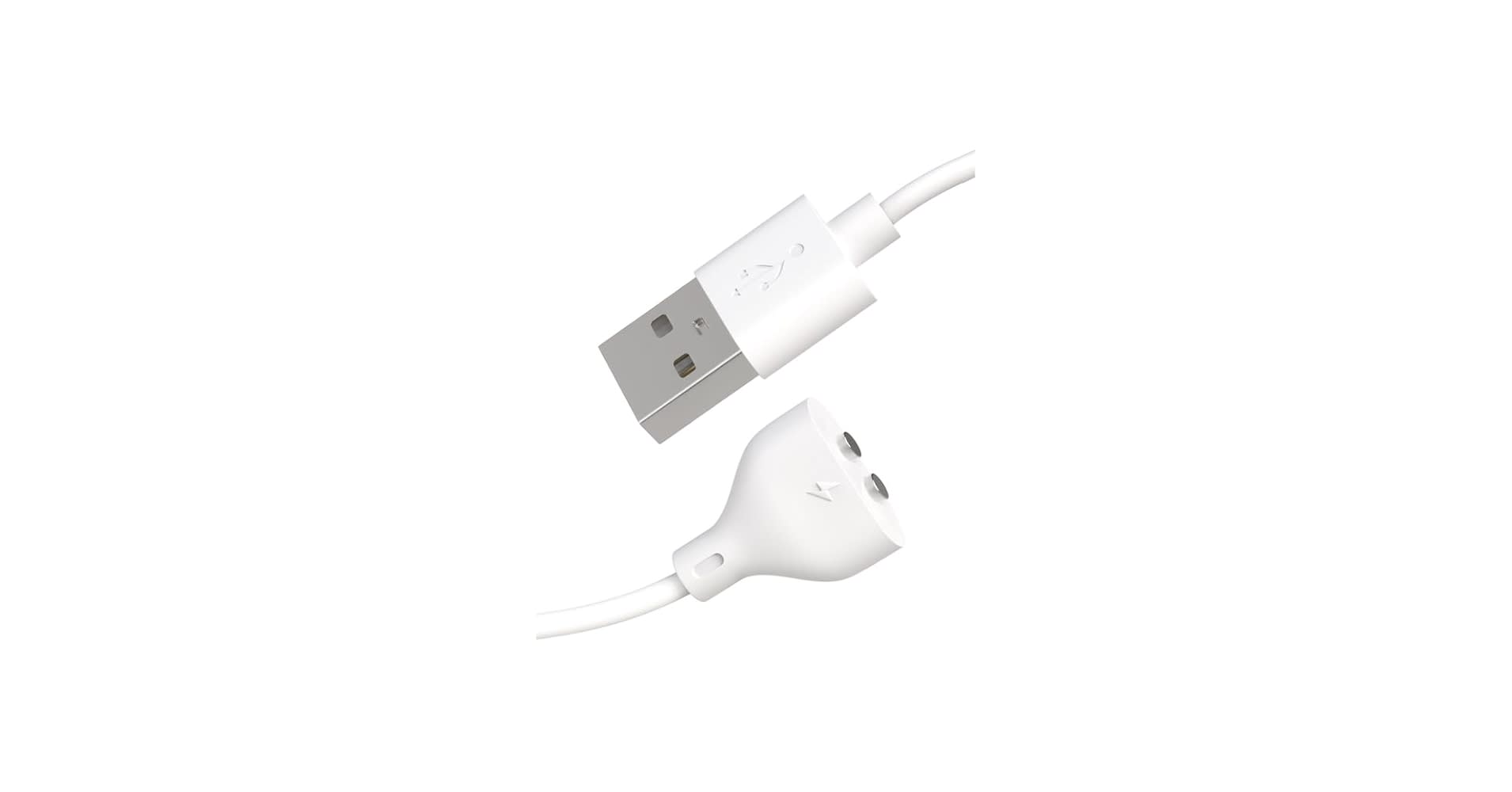
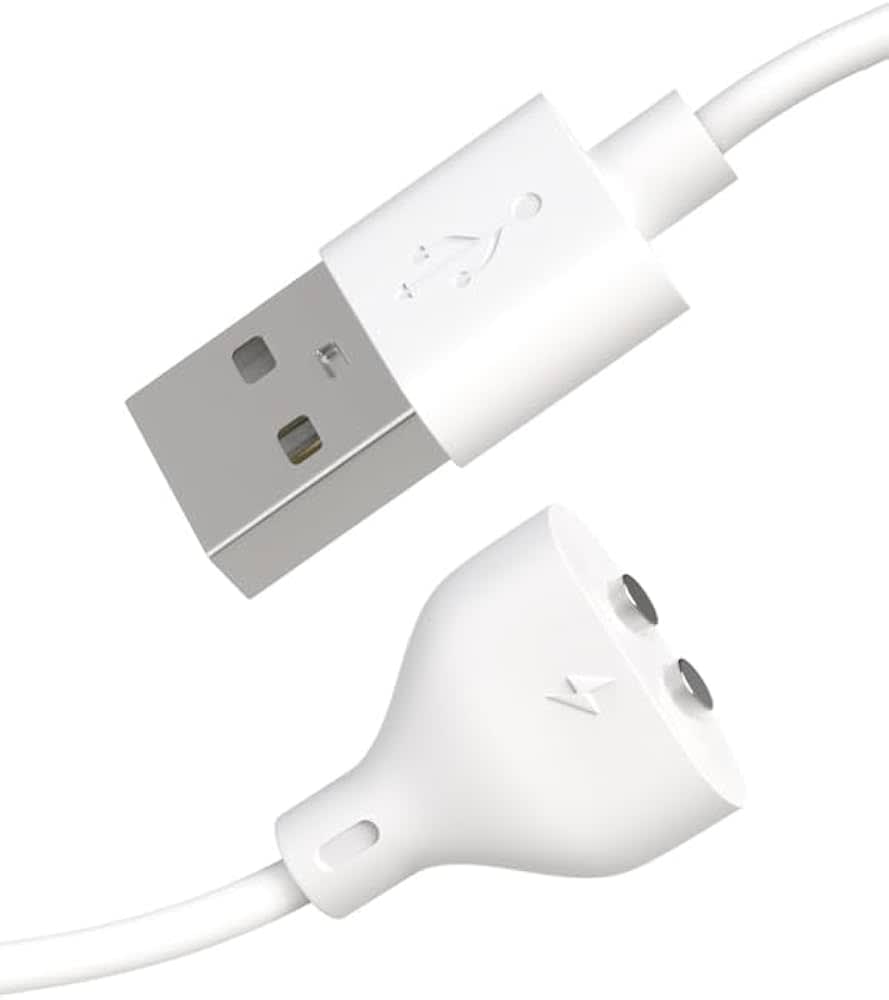
Two small metal contacts on the toy body, a cable end that snaps on magnetically. This is what Lovense, We-Vibe, LELO, Satisfyer, and nearly every mid-to-premium brand uses, and for good reason: the body stays fully sealed (see waterproofing above), there’s no port to corrode, and there’s nothing to plug in wrong.
The catch: the cable is proprietary, and you will be tempted to lose it. Magnetic charging cables are not interchangeable across brands—pin spacing and polarity differ—and often not even across models from the same brand. The cable is small, black, and looks like every other cable in your drawer. Practical advice: the day the toy arrives, order a spare cable from the brand’s accessories page, and keep one cable permanently in your travel kit. A $10 spare cable is the cheapest insurance in this category, because a lost cable on a discontinued model can genuinely strand a working toy.
One more livability note: magnetic connections can be knocked loose. If the toy charges on a nightstand where a phone cable drags across it, you’ll occasionally find it half-charged in the morning. Charge it somewhere the cable can lie flat and undisturbed.
2. True USB-C — the right answer, still rare
A genuine USB-C port on the toy means any cable in your house charges it. No proprietary spare to buy, no stranded toy when the cable disappears. In 2026 this is still uncommon in the category, and the reason is the waterproofing tradeoff: a port is a hole, and sealing a hole well costs engineering effort. The toys that do it properly use a snug silicone port cover, which works—until the cover’s tether tears off, which it does eventually.
If you find a toy with true USB-C, a well-fitted port cover, and an honest water-resistance rating, that’s a strong combination. Just read carefully: some listings say “USB rechargeable” when they mean “the cable has USB-A on the wall end.” That describes almost every toy made and tells you nothing about the toy-side connector.
3. Pin-in-port — the aging compromise
A thin round pin (like old feature-phone chargers) that pushes into a small hole in the toy. Common on budget models and older designs. It works, but it inherits the worst of both worlds: the port compromises waterproofing the same way any opening does, the pin connector is proprietary anyway, and the small socket collects lint and moisture. If you see pin-in-port on a new 2026 release, the brand is reusing an old tooling design. Not disqualifying at a low price, but know what you’re getting.
4. Induction pads and cradles — elegant, bulky
The toy rests on or in a charging base and charges with no contacts at all, like a wireless phone pad. Fully sealed body, zero connector wear, genuinely great engineering. The downside is pure logistics: the base is bulky, the toy only charges on its base (positioning matters—misaligned toys charge slowly or not at all), and traveling means packing a cradle. Best for a toy that lives at home in one spot.
Li-Ion Care for a Rechargeable Vibrator: What Works, What’s Myth
The lithium-ion cell inside a rechargeable vibrator is the same chemistry as your phone battery, and the same few rules apply. Everything else you’ve read is probably folklore. Here’s the short list that matters.
Don’t store it at 0%. Deep discharge is the most damaging thing you can do to a lithium cell. A toy that goes into a drawer dead and stays there for three months can drop below the voltage threshold where the protection circuit allows recharging at all—at which point a healthy motor is welded to a dead battery. If you’re putting a toy away for a while, give it a partial charge first, and top it up every couple of months.
Heat is the enemy. Lithium cells age fastest when they’re hot. Don’t leave a toy charging in direct sunlight, on a radiator shelf, or in a parked car. Don’t store it in a bathroom where the shower steams the room daily. Cool, dry drawer—same advice as for the silicone, conveniently.
Expect roughly 300–500 full charge cycles. That’s the standard service window for small consumer li-ion cells before capacity fades noticeably, and toy batteries are no exception. At once-or-twice-weekly use with a charge every few sessions, that’s years of service. Heavy daily use burns through the cycle budget proportionally faster—worth knowing, not worth worrying about.
Ignore “battery memory.” The advice to fully drain a battery before recharging it comes from nickel-cadmium cells from decades ago. Lithium-ion has no memory effect, and full drains actively hurt it. Partial charges, whenever convenient, are exactly what the chemistry wants. Similarly, you don’t need to “condition” a new toy with some ritual first charge—out of the box, charge it, use it.
Don’t leave it clamped at 100% forever. Sitting at full charge for weeks is mildly stressful for the cell. This one matters less than the first two rules—toys have small batteries and decent charging circuits—but the easy habit is: charge before use rather than immediately after, so the toy rests at a middle state of charge.
Traveling With a Rechargeable Vibrator
Two practical topics: keeping it off in transit, and lithium battery rules.
Travel locks. A vibrator buzzing inside checked luggage is a genuinely common scenario—common enough that security agencies have standard procedures for it. Most quality rechargeable toys have a travel lock: typically hold a button (or button combination) for several seconds until the toy flashes, repeat to unlock. Learn your toy’s sequence before the trip, not at the gate. If the toy has no lock, at minimum drain it to a low charge before packing, and pack it where pressure won’t hold a button down.
Lithium battery rules. Airline guidance—and this is general, factual information, not legal advice—treats devices with installed lithium-ion batteries under a fairly permissive standard: consumer devices with small installed cells are broadly acceptable, and carry-on is the generally preferred place for lithium batteries rather than checked bags, since crews can respond to a battery issue in the cabin. A vibrator’s battery is far smaller than a laptop’s. In practice: carry it in hand luggage, locked, and you’re following both the battery guidance and the “don’t let it buzz in the hold” logic at once. Check your specific airline’s published rules if you’re carrying multiple devices or spare power banks on the same trip.
If travel is the main use case, form factor matters as much as the battery—our discreet vibrators roundup covers the size-and-silhouette side of packing a toy.
Red Flags When Buying a Rechargeable Toy
The battery is the component you can’t inspect before buying and can’t service after. These listing patterns predict regret:
- No charge indicator anywhere. If nothing on the toy shows charging status—no LED, no pulse pattern—you can’t tell a charging toy from a dead cable or a misaligned magnetic contact. You find out at the worst possible time. A charge light is a trivially cheap component; its absence signals corner-cutting elsewhere.
- Runtime claims under an hour. A new toy that only promises 30–45 minutes per charge is starting life at the bottom. Li-ion capacity fades with cycles (see above), so a toy that begins at 40 minutes is a toy that will be functionally single-session within a couple of years. Look for two hours or more of claimed runtime.
- Vague or absent battery specs. No stated runtime, no stated charge time, “long-lasting battery” as the entire spec. Brands that measured proudly publish; brands that didn’t, adjectives.
- “USB rechargeable” doing heavy lifting. As noted above, this phrase can describe any connector on earth. If the listing photos never show the toy-side connector, assume pin-in-port until proven otherwise.
- And the one nobody prints on the box: in a sealed-body toy, the battery is not replaceable—by design, and that’s the honest tradeoff for waterproofing. Every sealed rechargeable vibrator ships with its lifespan pre-installed. When the cell finally fades, the toy is done, regardless of how healthy the motor is. That’s not a reason to avoid rechargeables; it’s a reason to buy ones with generous runtime headroom and to treat the battery well, because battery life and toy life are the same number.
The 2026 Picks, Ranked by Battery Behavior
Plenty of roundups rank toys by motor feel. These three are here for how their batteries behave in real use.
Lovense Lush 3 — the standby champion
A wearable is only as good as its ability to be ready—charged days ago, still alive when the moment comes. The Lush 3’s battery story is exactly that: manufacturer-stated use time in the multi-hour range, and standby measured in days, not hours, so a Sunday charge survives to the following weekend. Charging is magnetic pins (buy the spare cable), the body is fully sealed, and the battery comfortably outlasts any realistic wearing session. We go deeper on the toy itself in our Lush 3 review; as a battery citizen, it’s the best-behaved wearable we’ve tested. Check current Lush 3 price.
We-Vibe Tango X — the fast-charge bullet
Bullets get grabbed spontaneously, which makes charge speed matter more than raw runtime. The Tango X’s magnetic charger takes it from empty to full in well under two hours, and a short opportunistic top-up buys a usable session—the toy equivalent of a phone’s fast-charge getting you through an evening. Roughly two hours of runtime per full charge, in a sealed 3.7-inch body with a deep, rumbly motor that made our discreet-picks list on its own merits. Check current Tango X price.
LELO Mia 3 — the USB travel pick
The Mia 3’s lipstick disguise gets the attention, but the travel-relevant feature is charging: it charges over USB with standard-cable convenience, which means one less proprietary cable to forget in a hotel room. Runtime is the shortest of the three—around an hour and a half—so it’s a trip toy, not a daily driver, and the twist-cap design plus a low-profile silhouette make it the easiest of these picks to pack. Pair it with the carry-on-and-locked routine above. Check current Mia 3 price.
FAQ
How long should a rechargeable vibrator hold a charge in storage? A healthy li-ion cell self-discharges slowly—a toy stored at partial charge should still wake up months later. If a toy fully drains in a week of sitting idle, either something is keeping the circuit awake (a broken travel lock, a stuck button) or the cell is nearing end of life.
Can I use my phone charger’s wall plug with a vibrator cable? Generally yes. The toy’s charging circuit draws what it needs from a standard USB power source. What you shouldn’t do is force cables: magnetic charge cables are brand-specific, and a wrong-polarity third-party cable is the one genuinely risky swap in this category. Use the brand’s cable with any reputable USB plug.
Is it bad to charge a vibrator overnight? Occasionally, no—the protection circuit stops charging at full. As a permanent habit, it means the cell spends every night pinned at 100%, which is mildly harder on it than resting at a middle charge. Charge in the evening, unplug before bed, and the battery will thank you over the 300–500 cycles it owes you.
Biozzing may earn a commission if you buy through links on this page, at no extra cost to you.